
Fencing
History
Fencing developed into a modern Olympic sport at the end of the 19th and the beginning of the 20th century. Modern sport fencing has three weapons: épée, foil and sabre. The main differences between them are their weight, how hits are scored and the valid target area.
Fencing is one of only four sports that have featured at every modern Olympic Games, since the very first ones in Athens in 1896.
The International Fencing Federation (FIE) was founded in Paris in 1913. In addition to the Olympic Games every four years, the best fencers from all countries compete every year at world and continental championships and World Cup events in all three weapons and in different age categories (cadets, juniors, seniors).
Rudolf Cvetko
Rudolf Cvetko was a Slovenian officer and fencer and the first Slovenian to win an Olympic medal. At the 1912 Olympic Games in Stockholm, as a member of the Austrian fencing team, he won a silver medal in the team sabre event.
He later worked as a fencing teacher and coach in Ljubljana, in the fencing section of the Ilirija sports club. He was also a fencing referee and held senior positions in the Yugoslav Fencing Federation. After 1945 he devoted himself mainly to training young fencers at the Tabor sports club and to his work in the Slovenian Fencing Federation.
He also organised and led fencing instructor courses, laying the foundations of Slovenian fencing. He taught fencing at the Academy of Theatre (today AGRFT) and at the Institute of Physical Education in Ljubljana (today the Faculty of Sport). For his work he received numerous national and sporting awards, including the Bloudek Award.
Is it dangerous?
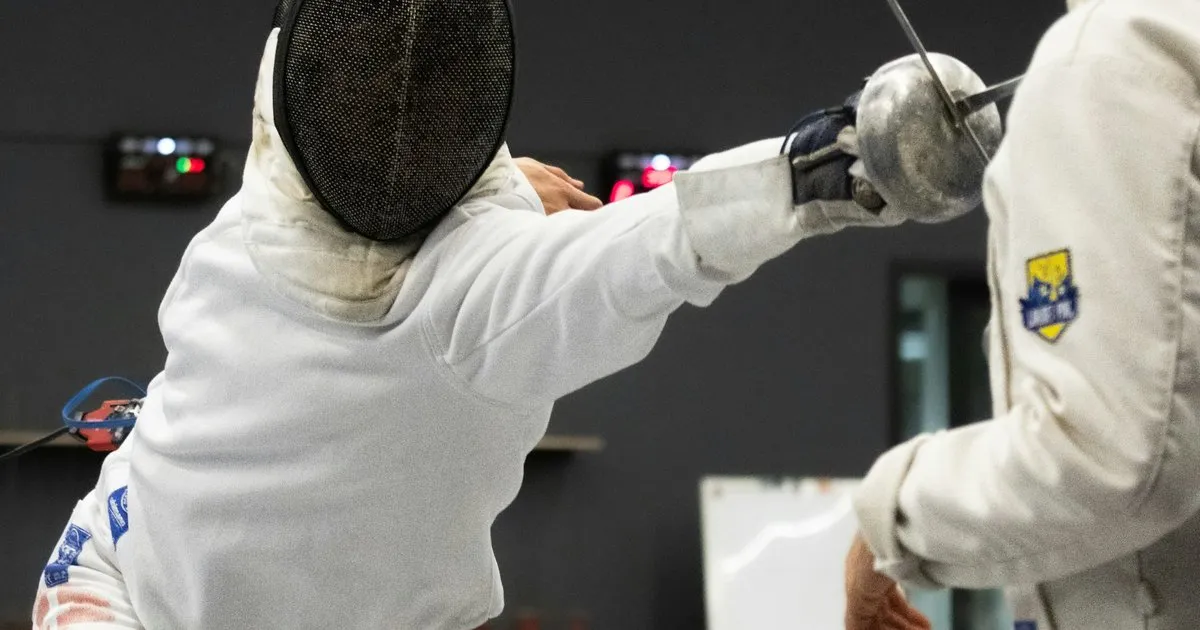
No. Fencing is one of the safer sports. Épées (as well as sabres and foils) are not sharp, and fencers wear protective equipment – a mask that protects the face and head, and a special protective suit that withstands a force of over 800 newtons.
Rules
- FIE rules – the official technical rules of the International Fencing Federation (in English and French)
- Offences and penalties – summary in Slovenian (PDF)
Useful links
- Slovenian Fencing Federation
- International Fencing Federation (FIE)
- European Fencing Confederation (EFC)
- FencingTimeLive – live results of international competitions
- Engarde – competition results